
How to Fill Shoulder Season in Hotels Without Cutting Room Prices
Hotels can fill up during shoulder season without chopping rates by coming up with a real reason to visit, focusing on the sort of traveler who's most likely to book, and adding loads of value to the room stay rather than just reducing the room's listed price. The smart move is to build up a base of demand before discounting becomes the go to option.
Shoulder season isn't just a softer version of peak season - its a completely different commercial game. There is still demand out there, but you need to sharpen up your positioning, get in better with some key partners and manage your distribution a heck of a lot better.
Consider something that's very familiar to all of us.
Scene One: The Peak-Season Come-Down
You had a fantastic summer - rooms were booked, the team was busy and rates stayed where they were. Then the quieter weeks start to creep in. The booking window stretches out, and midweek occupancy starts to soften. Local attractions start to cut back on their opening hours and suddenly the next month looks less certain and the commercial pressure starts building.
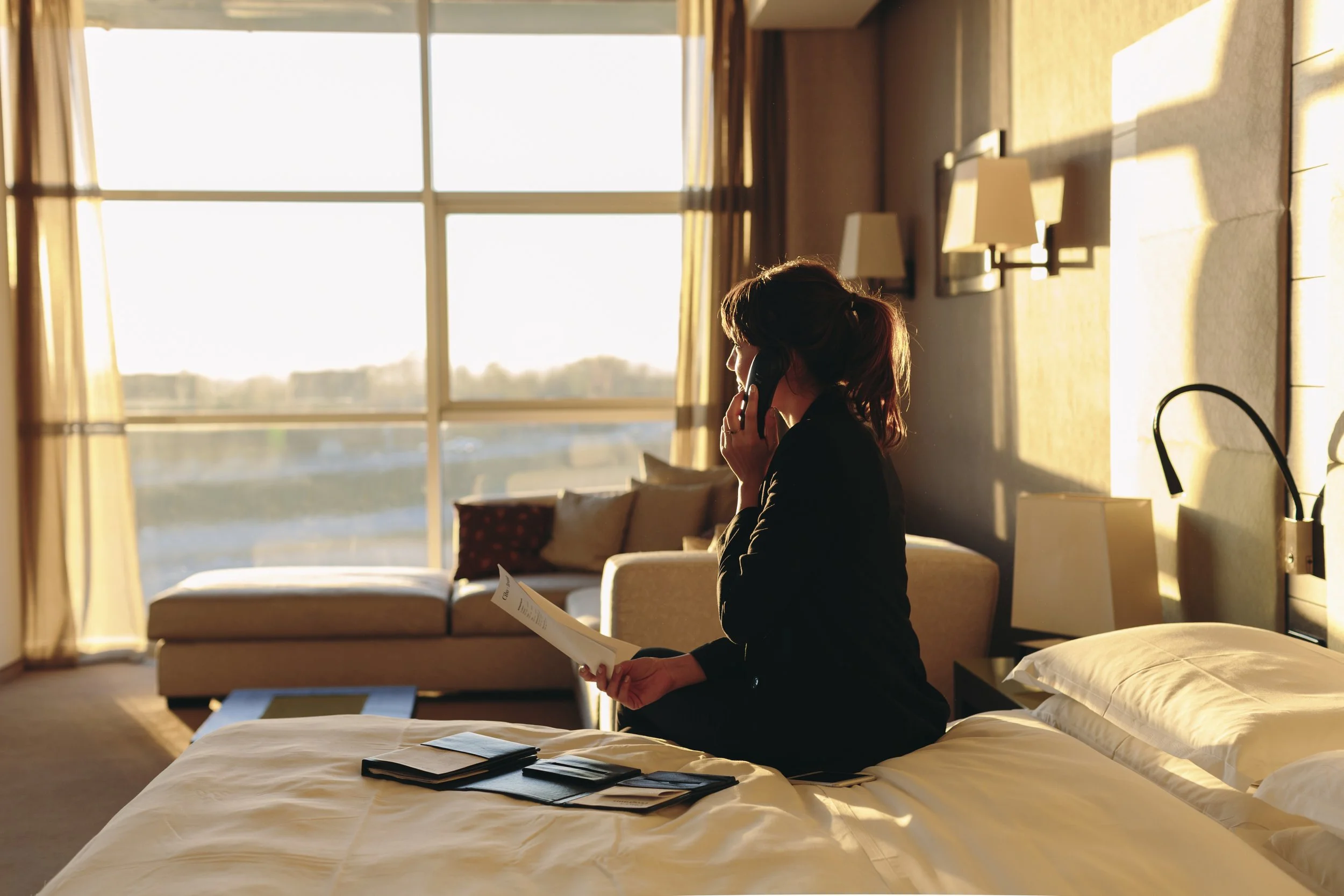
Someone suggests a discount.
Now I know why this gets suggested a lower rate can give you an instant burst of bookings. But it can also create a problem that's going to be banging away at you in the long term guests start to get the idea that your hotel is cheaper when demand is low, and future bookers start to wait for the discount to come along and let them have a room at a lower price.
And that's how discount dependency starts to creep in.
The problem is particularly pressing in the UK, where hotels are already dealing with rising payroll and operating costs. Knight Frank's 2025 UK Hotel Trading Performance Review said the UK hotel supply grew by 2.2% in 2024, while cost pressures were squeezing profitability. Getting those rooms filled is what matters - but filling them at a price that's way too low isn't exactly a strategy.
The question the executives should be asking isn't: “How do we make the room cheaper?”
Its: “Why should this guest travel to this destination on these particular dates and stay in this hotel?”
That is the demand-building question.
Scene Two: Getting to the Bottom of the Situation
Shoulder season is usually the time between peak and off-peak demand - for many of us in the UK, that might include the bits of April and May, September and October but the exact dates will depend on all sorts of factors like weather, the school calendar, public holidays and local events.
Mews' 2026 guide to shoulder season is really useful in that it highlights the important difference: its not the same as deep off-season. Demand might be softer, but the destination might still offer nice weather, open attractions and good reasons to visit.
That distinction should really shape your commercial response.
The thing that most hotels do is to throw a broad discount at all potential guests and expect them to all respond in the same way. A more smart approach is to identify the bits of demand that are hiding inside the quieter period:
couples looking for a break to enjoy some food, culture or countryside
people looking for a wellness retreat away from the crowds
visitors to local events, exhibitions or performances
corporate teams that need a meeting or off-site space
groups of friends or family who are here for weddings, sporting events or association meetings
remote workers or people on longer stays who are looking for a quieter base
international travellers who are deliberately avoiding the crowds of peak season
The thing is, the calendar is not empty just because nobody wants to travel, it's because the hotel hasn't given the right audience a good enough reason to come.
Scene Three: Create a Compelling Reason to Visit

A shoulder-season package shouldn't be some fancy name for a discount, it should be a properly thought out experience with a clear audience, a defined booking window and a reason that wouldn't exist without the partnership or programme in place.
Start with the destination.
Work Around Events
Take a look at the next 90 to 180 days for events like:
food and drink festivals
theatre, music and cultural programmes
sporting fixtures
art exhibitions and heritage events
walking and cycling events
university dates, graduation periods and visitor weekends
business conferences and regional trade events
Then ask what the hotel can own and make its own.
A coastal property might team up with a local guide to offer early autumn walking weekends, complete with packed lunch and late checkout. A city hotel might work with a theatre programme, a gallery exhibition or a food festival to create a reason to stay. A rural property could partner with a farm, vineyard or craft producer for a seasonal experience.
The point isn't to append a random ticket to a room, it's to create a real reason to stay.
Add Value with Care
Protect the headline room rate by adding in benefits that guests will really value and that don't cost the earth:
breakfast for two
a set-menu dinner or a drinks credit
parking included
flexible checkout
a spa treatment or wellness session
a guided local experience
a welcome hamper from a local producer
pet-friendly inclusions for properties that cater to that sort of guest
a complimentary room upgrade, subject to availability
The inclusion needs to fit with the positioning a luxury hotel shouldn't lead with a low value bundle that makes the brand feel transactional. A boutique city property might gain more from a curated local itinerary than from a generic percentage of message.
Work with Local Partners to Create a Demand Network
Local partners don't just have to be a way to offer a few cheap extras, they can be a powerful tool to build demand. Identify the local businesses that could help you create a compelling reason to visit, and work with them to create a network of demand.
This is where having a custom marketing solution really comes into its own. The package needs to reflect the property's audience, operational capacity and margin profile. There is no one size fits all solution for shoulder season.Hotels really need to stop treating local businesses like some kind of afterthought when it comes to their supply chain. In the shoulder season though, these businesses can actually become a key part of the hotel's engine driving demand.
Make a shortlist of partners who already attract the kind of crowds you want to see :
Restaurants and independent food producers they've got a great following.
Galleries, museums and heritage sites.
Wellness practitioners and fitness studios a perfect fit for a health-focused guest.
Outdoor guides and activity providers ideal for active types.
Theatres, venues and event organisers great for live music and theatre fans.
Universities and business networks a natural fit for corporate events.
Wedding planners and local venues ideal for couples.
Destination marketing organisations and tourism boards they can really help get the word out.
Then propose something specific and exciting no boring generic "can we collaborate email"
Present a proper commercial idea with clear details :
Who the target audience is.
When you're running the campaign.
What kind of package you're offering.
How guests are going to book.
What each partner is responsible for.
What kind of content and PR opportunities are on offer.
How you're going to track the referrals coming in from these partners.
Tourism boards and destination organisations can really help get the word out through their event calendars, regional campaigns and editorial content. Local partners bring the credibility and access to the audience that often eludes the hotel on its own.
This is also where a smart brand growth strategy starts to move away from just theory and gets real - the hotel's not just flogging a room, it's becoming a part of the local ecosystem that gives visitors a great reason to travel.
Scene five : Reach the right guest, not everyone
One of the biggest shoulder season marketing mistakes is trying to be too broad with your messaging.
" Escape this autumn."
"Save on your next stay"
" Special offer available "
These are all too easy to ignore and not very inspiring. A targeted campaign is way more useful because it speaks to a specific guest need and experience.
Use content that answers the questions your audience is already asking:
What can we do in this destination when it's quieter?
Which attractions stay open in September or October?
Where can we find a good weekend break without the peak-season crowds?
What makes this hotel perfect for a wellness retreat?
Where can a company host a productive off-site?
What local events are worth travelling for?
Your channel plan should be a mix of:
Destination and event content that leads to search results.
Email campaigns to past guests who came to visit in similar times of year.
Organic social content that shows the experience, not just the hotel room.
Paid campaigns aimed at defined audience segments.
Content shared by local businesses as a partner.
Earned media coverage in relevant travel, lifestyle and regional publications.
A digital marketing consultant can help tie everything together - the content, landing pages, paid activity and conversion data. But at the end of the day, technology should give you speed and scale, not replace good old human judgement.
Scene six : Use PR to create authority, not just noise
A shoulder season campaign gets way more traction when it's got a story behind it that's more interesting than " the hotel has empty rooms"
That story might be:
A new local food trail.
A partnership supporting independent businesses.
A seasonal wellness programme.
A cultural weekend built around a regional event.
A sustainability initiative that extends the visitor season.
A new corporate retreat format for local employers.
This is where a media relations agency can really add strategic value. Their role isn't just to send out a generic press release to every publication, it's to find the angle that makes the campaign newsworthy and interesting to journalists and their audiences.
Pitch the local, regional and sector-specific media first a regional newspaper or travel editor might deliver way more qualified attention than a huge but disconnected audience.
Use human judgement AI might be able to accelerate research and draft up variations but it can't assess whether a story is genuinely newsworthy or whether a claim might damage the hotel's reputation.
Scene seven : Protect rate integrity with structure
Value adds shouldn't turn into uncontrolled giveaways. Set some commercial guardrails before you launch the campaign.
Use things like :
Minimum stays on high demand weekends.
Two night packages around events.
Three night incentives for longer distance travellers.
Weekday meeting rates that aren't publicly advertised.
Limited room allocations for partner packages.
Direct booking benefits rather than undercutting the public rate.
Gap filler offers for isolated nights.
Early booking benefits with clear booking deadlines.
Last minute inventory controls restricted to the final booking window.
Cvent's shoulder-season guidance recommends looking at things like length of stay patterns, event calendars, ADR and RevPAR rather than treating the whole season as a single undifferentiated block.
The same principle applies on the distribution side keep your public rate architecture coherent across channels and then add value where it makes sense. Your direct channel might include breakfast, parking or flexible checkout. It's a way to improve the direct proposition without training the market to expect a lower room price.
EC Stream's guidance on reducing OTA dependence makes a wider point the hotel should be building a direct relationship with the guest rather than just renting demand from third-party platforms.
What to measure beyond occupancy
Occupancy is necessary but it's not enough. You should be measuring whether this strategy is creating profitable and repeatable demand.
Track :
ADR : Did the package protect the average daily rate?
RevPAR : Did revenue per available room go up? TRevPAR: Were food, drink, spa or activity revenues up?
Net revenue after acquisition costs: What was left over after paying out all the sales commissions and campaign expenses?
Length of stay : Did the package make any difference to how long guests stayed mid-week or over multiple nights?
Direct booking share : Are guests booking direct with us, or going elsewhere?
Package contribution margin : Which add-ons were actually adding value without cutting into our profits?
Partner referrals : Which local businesses are sending us qualified bookings?
Earned media referral traffic : Has our PR work generated any real interest?
Repeat booking and email capture : Did our campaign get any of these guests to come back and book again?
Guest satisfaction : Did our guests end up feeling like they got what they signed up for?
Knight Frank's review really brings home the importance of spreading your revenue streams, partnering with local businesses and making the most of the data you've got in a high cost hotel environment. And the thing is these aren't separate ideas we can just pick and choose from. They're all connected bits of the same commercial engine.
The final act: A shoulder-season operating model that's really robust
You know the hangover after peak season is coming, so plan your response before it hits.
First figure out exactly when demand starts to soften what are the key events we should know about, what experiences are still available and which groups are our priority targets. Then based on all that build a few packages that are going to make us some real money. Get some local partners on board, create some good content and get your media angles in place well ahead of time. Set those rate and inventory limits, then check in on how we're doing every week and tinker with the audience, message or package inclusions before we're forced to start cutting rates.

That's the choice you need to make.
Hotels that can fill the shoulder season without panicking don't start competing on price to get the bookings. Instead they come up with a reason for people to come to our destination in the first place. They make it more useful, and then tell the world about it in a way that really resonates.
And that's where discounting comes in. It's a bit of a tactical toy whereas building demand is the real engine of revenue.
Get in touch with EC Stream to plan a social media and marketing campaign tailored to your hospitality brand.